

If you or someone you love has ever walked the quiet, disorienting path of a traumatic brain injury, you know that recovery rarely follows a straight line.
A gentle note: this post includes a personal story of head injury and describes research on injured lab animals. Please read at your own pace and skip any section that doesn't feel right for you.
Head trauma has touched my family more than once. My husband experienced multiple concussions throughout his youth and active martial arts background. When our son was in fifth grade, a simple gym class incident left him dealing with a concussion so significant he was out of school for months. We watched him navigate prolonged sensory rest, living quietly in darkened rooms just as puberty was beginning to stir.
For my husband and me, whose early injuries happened in an era when people simply shook it off, modern concussion protocols were completely eye-opening. Later, when I suffered a traumatic brain injury of my own that brought months of disorienting auditory and visual hallucinations, conventional care offered very few answers for true restoration. My path to recovery required looking deeper. It was only through the integrated guidance of my Ayurvedic doctor and acupuncturist, alongside my daily commitment to energy work, therapeutic Yoga, and a profound immersion in my meditation and breathwork practice, that I finally found my footing again. Sitting in quiet, conscious breath became my sanctuary and the bridge that allowed my mind and body to recalibrate.
Because head injuries can leave subtle, lasting imprints across the nervous system, our family is always attentive to emerging research on brain resilience. That is why a growing body of research, animal and human, exploring psilocybin and traumatic brain injury caught my full attention.

What the Science Is Revealing
In conventional neurology, a concussion is classified as a "mild" traumatic brain injury (mTBI). Yet anyone who has walked this path knows there is nothing mild about the lingering brain fog, sensory sensitivity, autonomic shifts, or emotional fatigue that can follow. Currently, allopathic medicine offers little beyond rest and gradual symptom management, with no approved pharmaceutical that actively repairs underlying tissue disruption.
A study led by researchers including Argel Aguilar-Valles of Carleton University, in collaboration with US-based colleagues, gave middle-aged female rats one mild head impact per day for three consecutive days, then treated them with psilocybin shortly after each injury. This protocol was designed to mirror repeated concussive impacts, the kind athletes, military personnel, survivors of falls, and survivors of intimate partner violence often face, more closely than earlier studies using a single, severe blow.
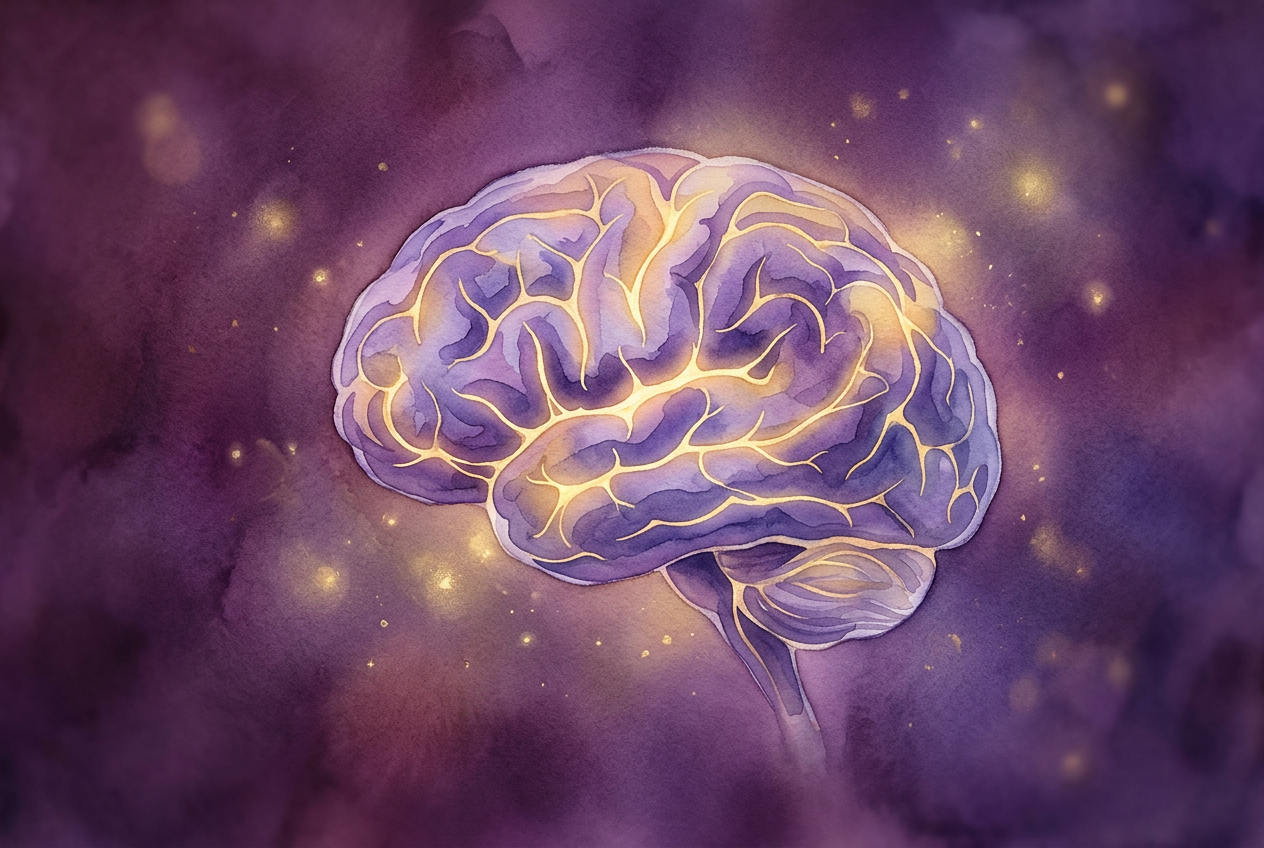
Using advanced brain imaging, protein analysis, and behavioral assessments, the researchers observed several distinct biological markers:
Reduced Fluid Leakage (Vasogenic Edema): Following repeated impact, imaging revealed fluid pooling outside brain cells where the blood-brain barrier had been disrupted. Psilocybin substantially reduced this fluid buildup.
Restored Blood Vessel Regulation: Three weeks after injury, untreated rats still showed impaired vascular responses, particularly in the prefrontal cortex, the region responsible for executive function and decision-making. Psilocybin partially restored healthy vascular control here.
Increased Neural Connectivity: Repeated impacts dampened coordinated communication between brain regions. Psilocybin not only restored this, it produced connectivity higher than in uninjured animals. The researchers are careful to note this "hyperconnectivity" isn't automatically good news. It may represent helpful reorganization, or it may reflect excessive signaling with its own risks. This remains an open question.
Lowered Phosphorylated Tau: Psilocybin reduced levels of this abnormal protein, which is linked to chronic traumatic encephalopathy (CTE) and long-term neurodegeneration.
Upregulated Growth Factors: The study confirmed increases in brain-derived neurotrophic factor (BDNF) and its receptor, TrkB, both essential to how brain cells survive, adapt, and form new connections.
Broadening the Scientific Picture
This study joins a small but growing body of peer-reviewed research on psilocybin and brain injury, moving from lab animals toward real human outcomes:
Chronic-Phase Intervention: A study in Cell Reports Medicine (2026), led by Allen and colleagues, gave rats a single psilocybin injection a full year after a more severe brain injury. Even at that distance from the original trauma, psilocybin restored behavioral function, normalized serotonin (5-HT2A) receptor signaling, and reduced microglial density, a marker of chronic brain inflammation, in the prefrontal cortex.
Repetitive Trauma and Hypoxia Models: A study in Molecular Psychiatry (2025) looked specifically at brain injury from intimate partner violence, a population the original researchers named as especially vulnerable and understudied. Female rats underwent a repeated injury model combining head impact and non-fatal strangulation, followed by sixteen weeks of recovery. Psilocybin measurably improved behavioral, cognitive, and neurobiological outcomes in this model.
Translating to Human Data: A study in Frontiers in Psychiatry (2025), led by researchers at Imperial College London, followed 21 military veterans with a history of traumatic brain injury through two supervised psilocybin retreats in Jamaica, run by the nonprofit Heroic Hearts Project, where this kind of guided psilocybin use is legal. Participants showed improved mental health outcomes and normalized EEG brain activity afterward. Separately, a registered clinical trial, titled "Treatment of Persisting Symptoms After Concussion With Psilocybin Assisted Therapy," is tracking safety and symptom outcomes in concussion patients over six months. Together, these represent real, if early, steps from the lab toward the clinic.
Voices From the Field
Behind the data are real people whose stories have moved this conversation into the public eye.
Daniel Carcillo, a two-time Stanley Cup champion with the Chicago Blackhawks, retired from the NHL at 30 after roughly a dozen documented concussions and was diagnosed with early-onset dementia. Conventional treatment brought little relief, and he has spoken publicly about reaching a breaking point. In what he has called a last-ditch effort, he tried psilocybin in Denver, one of the first US cities to decriminalize it, and reports that his symptoms reversed. He went on to found the Chapter 5 Foundation, supporting former players with post-concussion syndrome, and later Wesana Health, a company researching psilocybin-based treatment for brain injury. He has since opened a supervised psilocybin treatment facility in Portland, Oregon, where this kind of therapy is legal, serving athletes and veterans recovering from brain injury.
Former NFL player Kerry Rhodes has shared a related but distinct story. Rhodes has spoken about ayahuasca, a different plant medicine than psilocybin, easing the headaches and memory issues that followed his own repeated concussions.
Organizations like Heroic Hearts Project and VETS (Veterans Exploring Treatment Solutions) now exist specifically to connect veterans and others with legal, professionally guided psychedelic-assisted care, rather than leaving people to navigate this alone. That distinction, guided and legal versus solo and unregulated, matters enormously, and it's part of why the caution below is so important.
An Important Caution
As heartening as these findings and stories are, the researchers behind this science are direct: psilocybin is not ready to be considered a treatment for concussion, and none of this should encourage anyone to self-medicate after a head injury.
The Carleton-led rat study was conducted in female rats only, with dosing timed to within 30 minutes of injury, a window unlikely to be practical in human care. Imaging was performed under anesthesia, which can itself affect brain fluid and blood flow. Even the human veteran study took place in a carefully supervised retreat setting with trained facilitators and extensive preparation, not a self-directed experience.
Worth noting too: the lead author of the Carleton rat study discloses a consulting relationship and past research funding from two pharmaceutical companies developing psychedelic compounds. That doesn't invalidate the findings, but it's the kind of disclosure worth knowing about.
Psilocybin also remains federally illegal in the United States and is classified as a Schedule I controlled substance, though laws vary by state and country. If this research resonates with you, the safest path forward is a conversation with a qualified medical provider, not experimentation on your own.
Bridging Modern Metrics with Subtle Energetics
What makes these specific findings so meaningful is how directly they mirror what holistic systems have long mapped in post-concussive recovery.
1. Fluid Clearance and Vyana Vayu
The observation of fluid leaking past the blood-brain barrier (vasogenic edema) and compromised vascular autoregulation echoes what traditional frameworks describe as fluid and metabolic stagnation (amavisha, pronounced ah-mah-VEE-shuh) settling into the nervous tissue (Majja Dhatu, pronounced MAHJ-jah DHAH-too). In subtle anatomy, the circulation of blood and life force is directed by Vyana Vayu (pronounced vee-AH-nuh VAH-yoo).
When an impact disrupts vascular elasticity, practices like unhurried, rhythmic breathwork (Pranayama, pronounced prah-nah-YAH-mah) help gently restore healthy vascular tone and cellular fluid dynamics.
2. The Nuance of Hyperconnectivity and Prana
The finding of neural "hyperconnectivity" illustrates the delicate nature of subtle energy. In yogic physiology, Prana must move smoothly through the subtle channels (Nadis, pronounced NAH-dees). Healing is rarely about over-stimulating the brain; it is about cultivating balanced, coherent communication. This is why deep meditative stillness and nervous system downregulation are essential companions to any neuro-restorative process.
3. Calming Inflammation and Polyvagal Safety
The reduced microglial density seen in the one-year-later study mirrors the Pitta aggravation that flares after mechanical trauma. Calming this internal friction requires cooling, easily assimilated nourishment, hydration, and an environment of profound physical safety. Contemporary Polyvagal Theory reminds us that brain trauma frequently locks the autonomic nervous system into persistent dorsal shutdown or heightened sympathetic alarm. Entering quiet restorative Yoga postures signals to the deep brain structures that defense is no longer required, allowing genuine repair to proceed.
Deepening the Circle of Support: LoveYourBrain
Navigating recovery taught me firsthand how deeply we need compassionate, informed community spaces. Because of my own experience and my desire to offer safer, specialized support for others walking this road, I have been working toward advanced certification with LoveYourBrain.
LoveYourBrain is a truly remarkable organization dedicated to improving the quality of life for people affected by traumatic brain injury and spinal cord injuries. They offer evidence-based Yoga, mindfulness, and community programs tailored specifically to how an injured brain heals. I completed my Level 1 certification this past summer and will be completing Level 2 in March of 2027. Integrating their pioneering methodology alongside subtle energetic practices is one of the most meaningful ways I can serve our community, reminding every student that healing and living a rich, vibrant life after head trauma is entirely possible.
Gentle Principles for Nervous System Resilience
If you or someone you care about carries the subtle aftereffects of an old impact or concussion, know that the brain remains plastic and capable of renewal throughout life. A few gentle practices to support long-term healing include:
Cultivating Daily Breath and Stillness: Even five to ten minutes of slow, diaphragmatic breathing paired with quiet, eyes-closed awareness settles autonomic reactivity and promotes brain coherence.
Practicing Proactive Sensory Rest: Offer your visual and auditory pathways regular quiet breaks away from harsh screens, bright artificial lighting, and loud spaces before exhaustion sets in.
Prioritizing Cooling, Grounding Nourishment: Focus on warm, easily assimilated meals prepared with nourishing fats like pure ghee, gentle cooling spices like fennel seed, and clean, unrefined salts that hydrate the subtle tissues.
Staying Curious with Discernment: The growing exploration into plant-derived compounds reminds us of nature's intelligence, while scientific discernment keeps us grounded in safe, sustainable practices.

Brain healing is never about forcing progress; it is an unhurried practice of deep listening and creating the conditions for the body to remember its own wholeness.
If you or a loved one are currently walking the quiet path of concussion recovery, please know that you do not have to navigate it alone. Feel free to reach out to me directly or reply to this post to share your story, ask questions, or connect on gentle, nervous-system-centered ways to support your healing journey.
With warmth and reverence for your journey.
Fill your cup first 🍵 💕
Jennifer Misterka