
Quiet the Noise: A Beginner’s Guide to Finding Your Seat
Why "emptying your mind" is a myth, and how to find the practice that actually fits your brain.

1. The Hook: The "Empty Mind" Myth
"I can't meditate; my mind is too busy."
I hear this every single week. It is the number one barrier to entry. But saying you can't meditate because your mind is thinking is like saying you can't shower because you're dirty. The thinking is the dirt we are there to wash.
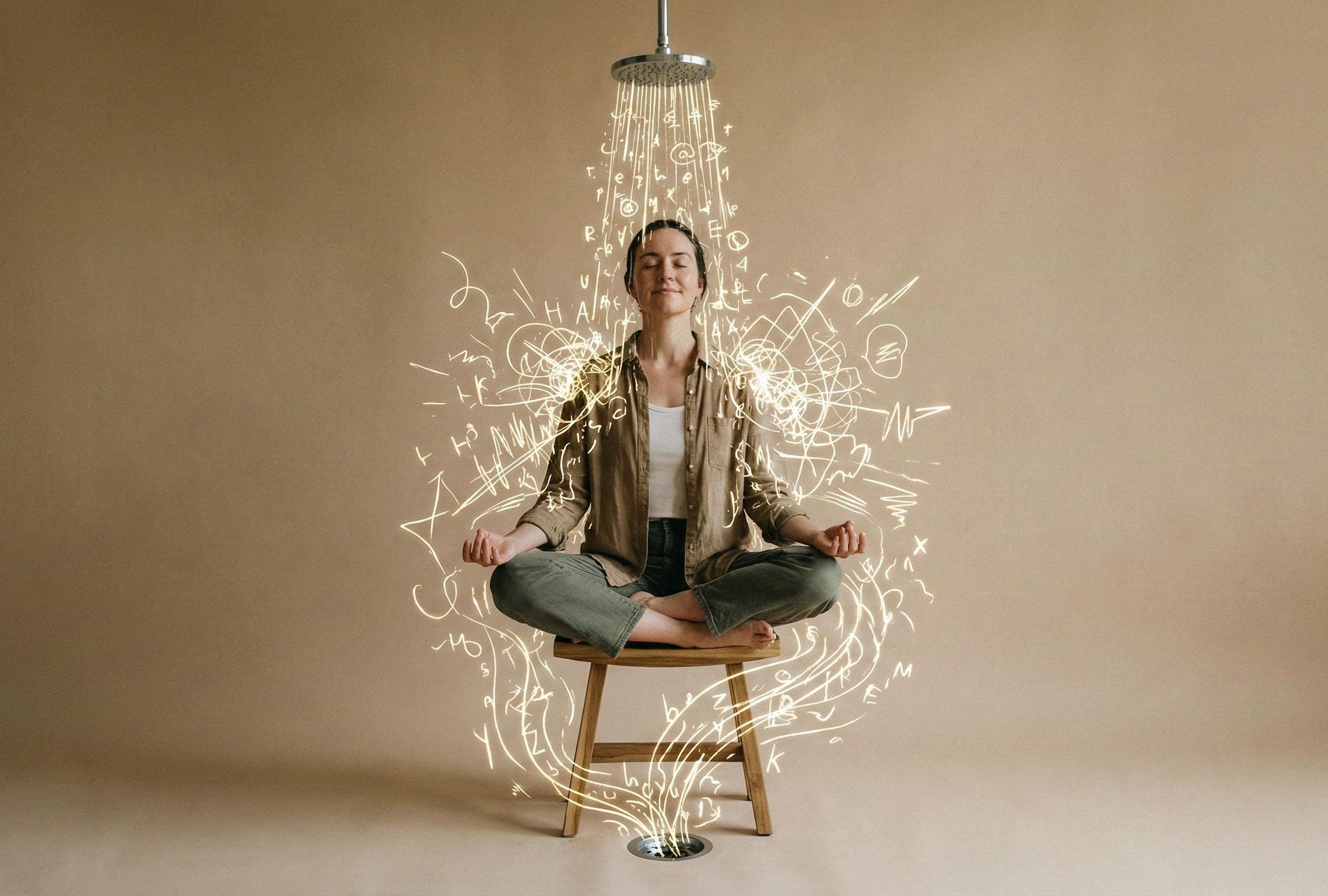
In this series, we are going to throw away the idea that you need to be a monk on a mountaintop. We are going to look at meditation through the lens of bio-individuality. Just as Ayurveda teaches us that not everyone should eat raw kale, not everyone should practice silent Vipassana.
2. The Synthesis: The Sage & The Scientist
The Scientist: The Default Mode Network
Neuroscience tells us that when you aren't doing a specific task, your brain enters the "Default Mode Network" (DMN). This is the "time travel" mode—worrying about the future or regretting the past. It burns a tremendous amount of glucose and keeps your cortisol (stress hormone) high. Meditation is simply the act of switching the DMN off and turning the "Task Positive Network" on.
The Sage: Chitta Vritti Nirodha
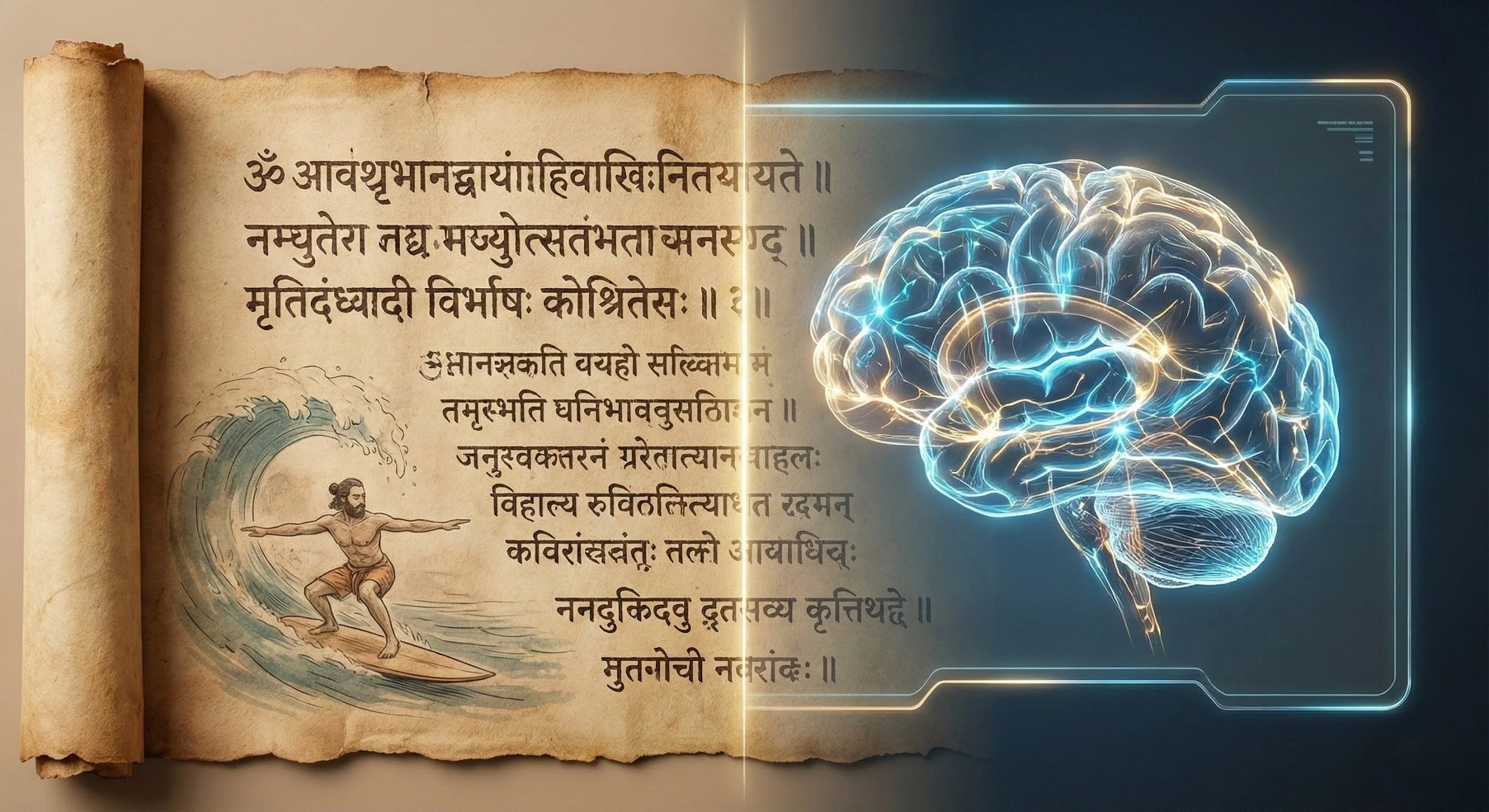
Thousands of years ago, the Sage Patanjali defined Yoga not as "touching your toes," but as Chitta Vritti Nirodha—"stilling the fluctuations of the mind-stuff." He understood that the mind is a wave machine. We don't try to stop the waves by fighting them; we learn to surf.
3. The Menu: Three Lenses on the Practice
We will dive deeper into these in future weeks, but for today, understand that there are generally three "doors" to the meditative state:
The Anchor (Mantra/Sound):
Best for: The "Over-Thinker" or the "Busy Bee."
The Method: You give the monkey mind a job (repeating a sound or phrase) so the rest of the mind can settle.
The Witness (Mindfulness/Somatic):
Best for: The "Feeler" or those engaging in trauma healing.
The Method: Instead of tuning out, you tune in. You watch your thoughts like clouds passing in the sky, or you notice sensations in the body without judgment.
The Alchemist (Breath & Energy/Kriya):
Best for: The "Seeker" who wants deep transformation, not just relaxation.
The Method: Using the breath to control life force (Prana). Note: This is an advanced lineage path often requiring initiation, which we will discuss later this month.
Interactive Tool: The "Meditation Style" Quiz
Question 1: When you are stressed, what is your primary symptom?
A) My thoughts race at 100mph. I make list after list. (Vata/Mind)
B) I feel heavy, sluggish, or stuck. I just want to nap. (Kapha/Body)
C) I feel irritable, hot, or self-critical. (Pitta/Emotion)
Question 2: If I asked you to "visualize a beach," what happens?
A) I see a vague picture, but my mind wanders to my grocery list.
B) I can feel the sand and smell the salt air immediately.
C) I don't see anything; I just think about the concept of a beach.
Question 3: What helps you focus best at work?
A) Background noise or instrumental music.
B) Absolute silence.
C) Breaking the task into small, physical steps.
The Results:
Mostly A’s: The Anchor (Mantra). Your mind is fast. Silence is actually too loud for you right now. You need a Mantra (a sacred sound) to give your "monkey mind" a bone to chew on. Stay tuned for next week's guide on Japa Meditation.
Mostly B’s: The Witness (Somatic/Visualization). You are deeply sensory. You will thrive with practices that use the body or imagination as a focal point. Guided Visualizations or Body Scans are your gateway.
Mostly C’s: The Stabilizer (Breath/Pranayama). You need to regulate your nervous system first. Before you can sit and "watch" your thoughts, you need to cool the fire using your breath. Simple rhythmic breathing is your starting line.
Your Homework: Just One Minute
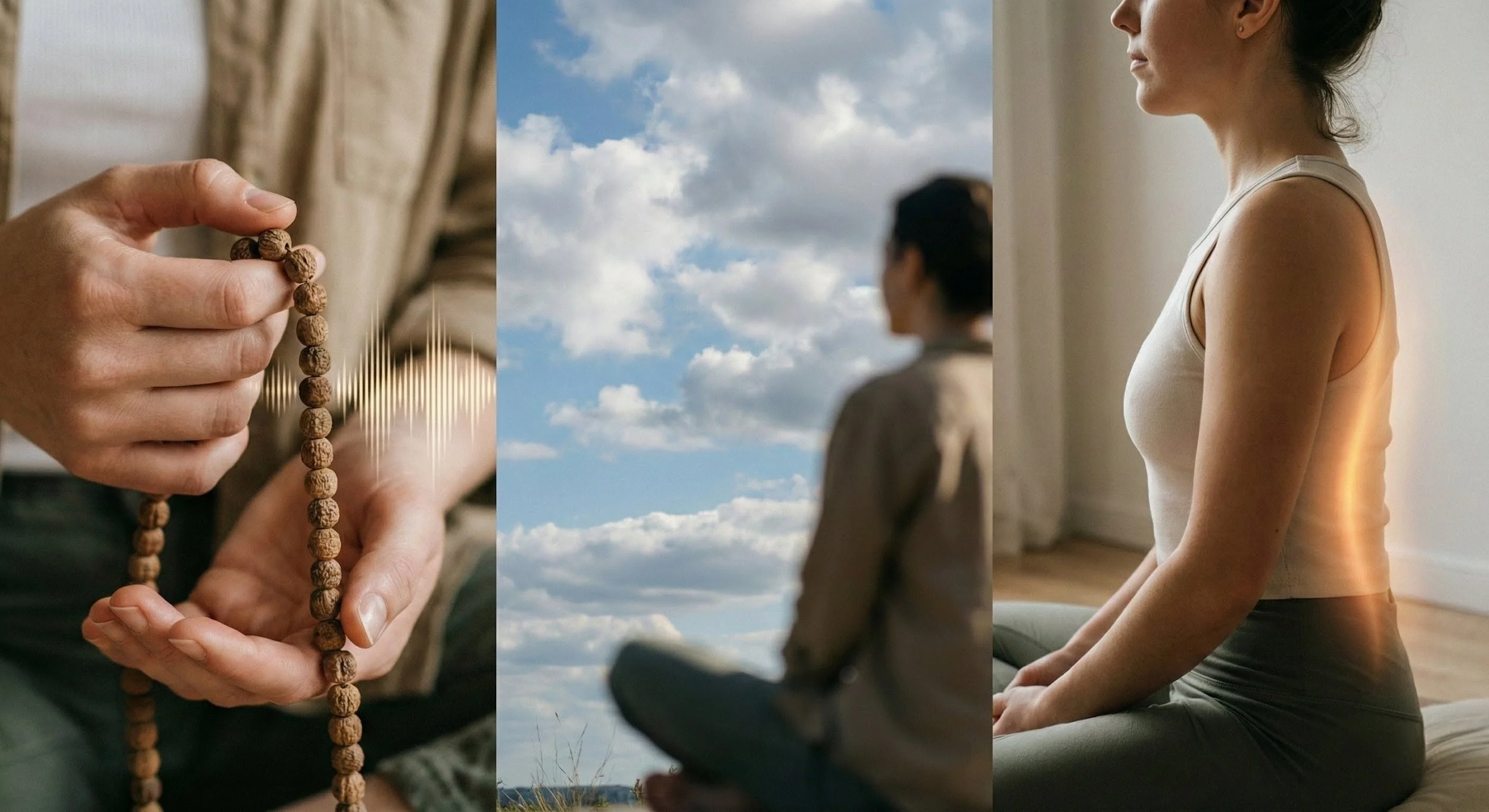
This week, I don't want you to sit for 20 minutes. I want you to sit for one minute.
Set a timer. Close your eyes. And simply ask yourself: "What is the weather like inside me right now?" Is it stormy? Sunny? Foggy?
Don't change the weather. Just look at it.
That’s it. You just meditated.