
The Missing Link in Mental Illness
An Ayurvedic guide to mental wellness and stabilizing the "Psychobiome"
Introduction: Beyond the Brain
For decades, the medical treatment of mental health conditions has focused almost exclusively on the brain, relying heavily on medications to manage symptoms. While these medications can be lifelines, they often come with heavy side effects and rarely address the root cause of the instability.
But what if the root isn't just in the brain?
A revolutionary convergence is happening between modern NIH-funded research and 5,000-year-old Ayurvedic wisdom. Both are pointing to the same conclusion: the gut is our "second brain," and a toxic gut can lead to a toxic mind.
For individuals suffering from mental health conditions like schizophrenia, this offers a new avenue for profound healing. It suggests that by changing the environment of the gut, we can drastically improve mental clarity and stability.
The Science: The "Psychobiome"
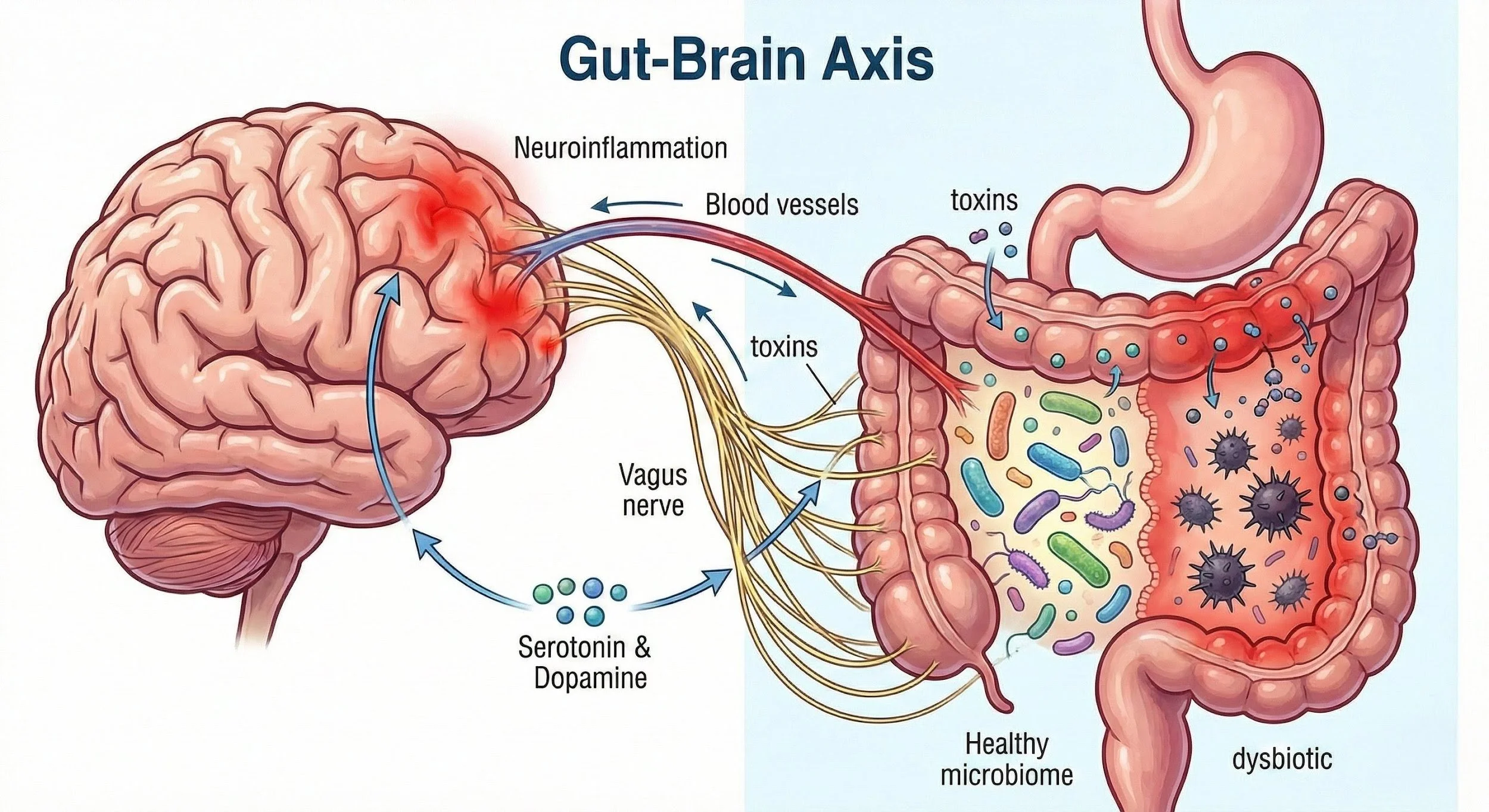
Modern science has established the existence of the "Gut-Brain Axis"—a superhighway of communication between your stomach and your nervous system.
NIH studies have confirmed that people struggling with mental health conditions almost always have a compromised gut microbiome (dysbiosis). Their gut has lost its bacterial diversity, allowing pro-inflammatory bacteria to take over.
How the Gut Affects the Mind:
The Leaky Gut Connection: When the gut lining is inflamed, bacterial toxins leak into the bloodstream. These toxins cross the blood-brain barrier, causing neuroinflammation (brain swelling), which is highly correlated with psychotic episodes.
Chemical Starvation: Over 90% of your serotonin (the happiness chemical) and 50% of your dopamine are made in the gut. If your good bacteria are decimated, your brain is starved of the chemical messengers it needs for stability.
The Ancient View: Shaka Vansiya Ayurveda (SVA)
This modern discovery is old news to Ayurveda. In the specific lineage of Shaka Vansiya Ayurveda (SVA), taught by Vaidya Rama Kant Mishra, the connection is explicit.
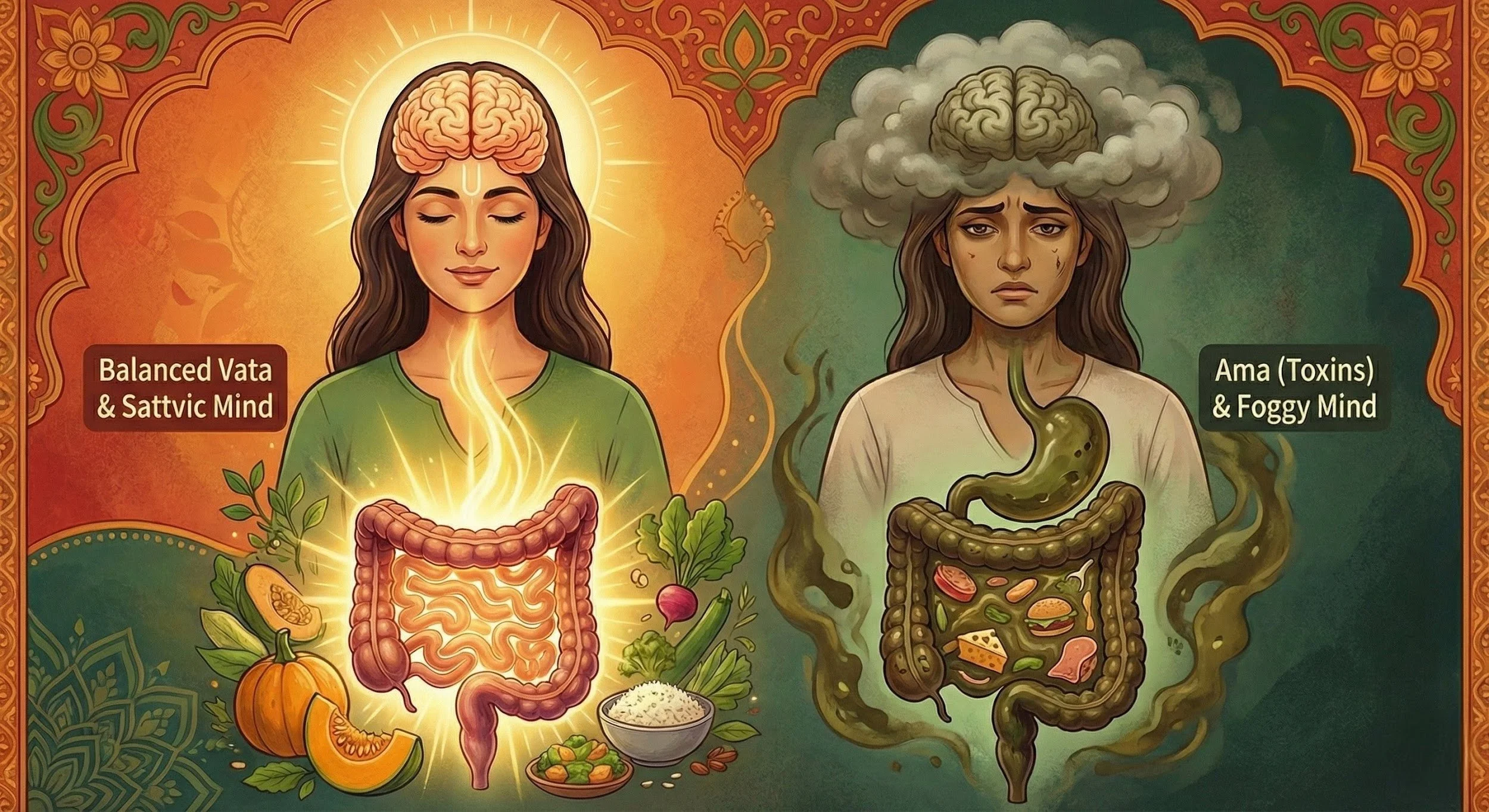
In SVA, the colon is the main seat of Vata dosha—the energy that governs movement, nerve impulses, and thinking. When we eat "dead" (processed, frozen, left-over) foods, they rot in the colon and create a toxic sludge called Ama.
This toxic energy travels up from the gut, lodges in the nervous tissues, and "fogs" the brain. The SVA perspective is clear: You cannot have a grounded mind if you have a toxic colon.
The Protocol: The Dietary Shift
Both modern science and SVA agree on the solution: stop inflaming the gut and start nourishing the nerves.
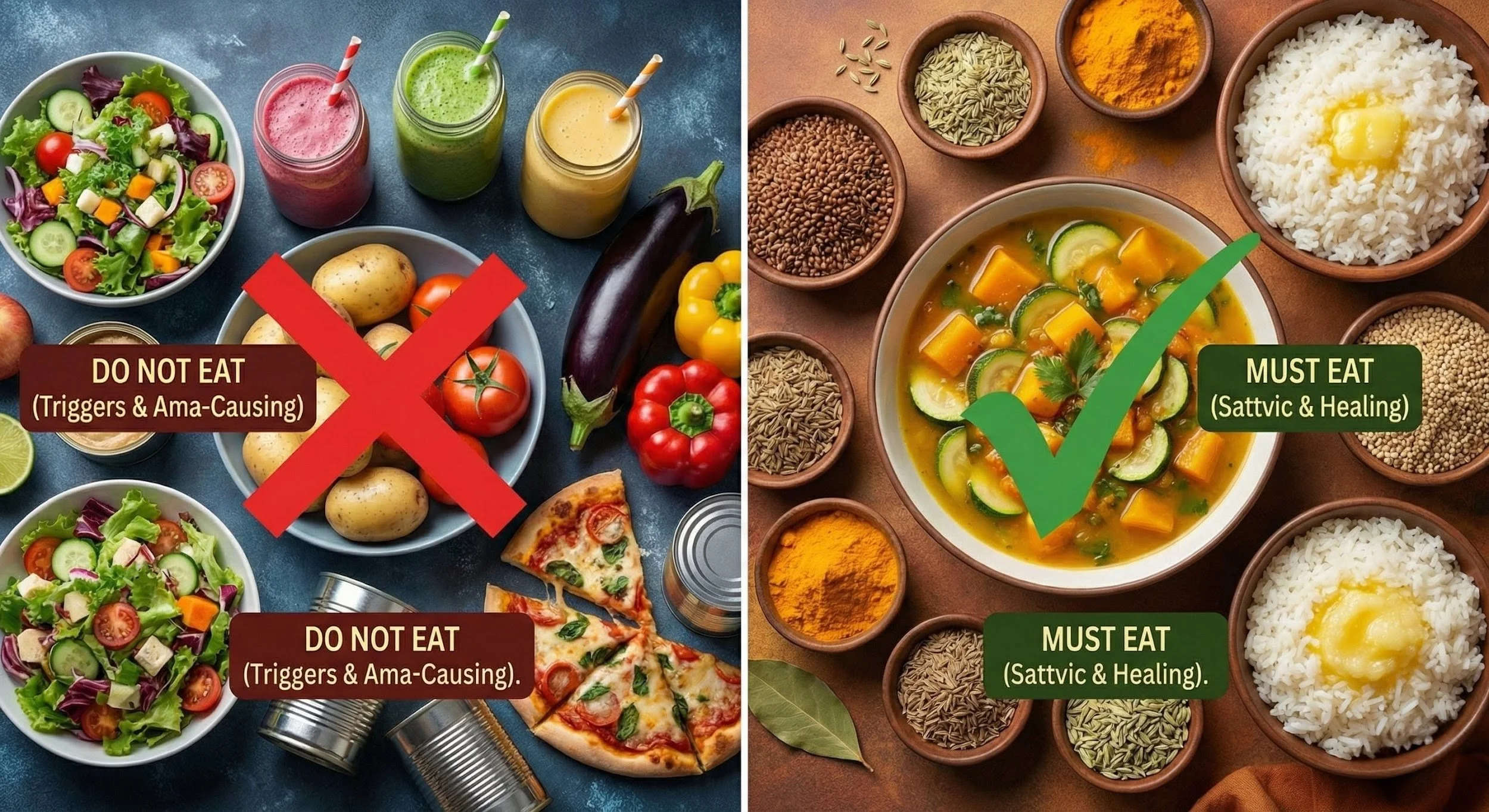
The "Do Not Eat" List (The Triggers)
🚫 NO Nightshades: (Potatoes, Tomatoes, Eggplant, Peppers) – contain compounds that irritate nerve endings.
🚫 NO "Old" Food: (Leftovers, Fermented Foods, Canned Goods) – high in histamine, which triggers anxiety.
🚫 NO Raw Foods: (Salads, Smoothies) – hard to digest; they ferment and create gas (Vata) that pushes panic upward to the heart and head.
The "Must Eat" List (The Healers)
✅ Warm, Cooked "Sattvic" Foods: Fresh squash, zucchini, soft rice, and quinoa.
✅ Ghee (Clarified Butter): The primary fuel for the brain. It repairs the fatty protective layer (myelin sheath) of the nerves.
✅ Warm Spices: Turmeric, Cumin, Coriander, and Fennel to help the liver filter toxins.
The Hard Truth: The "Die-Off" & The Craving Scream
This is the most critical section for patients and caregivers. When you change your diet, you may feel worse before you feel better.
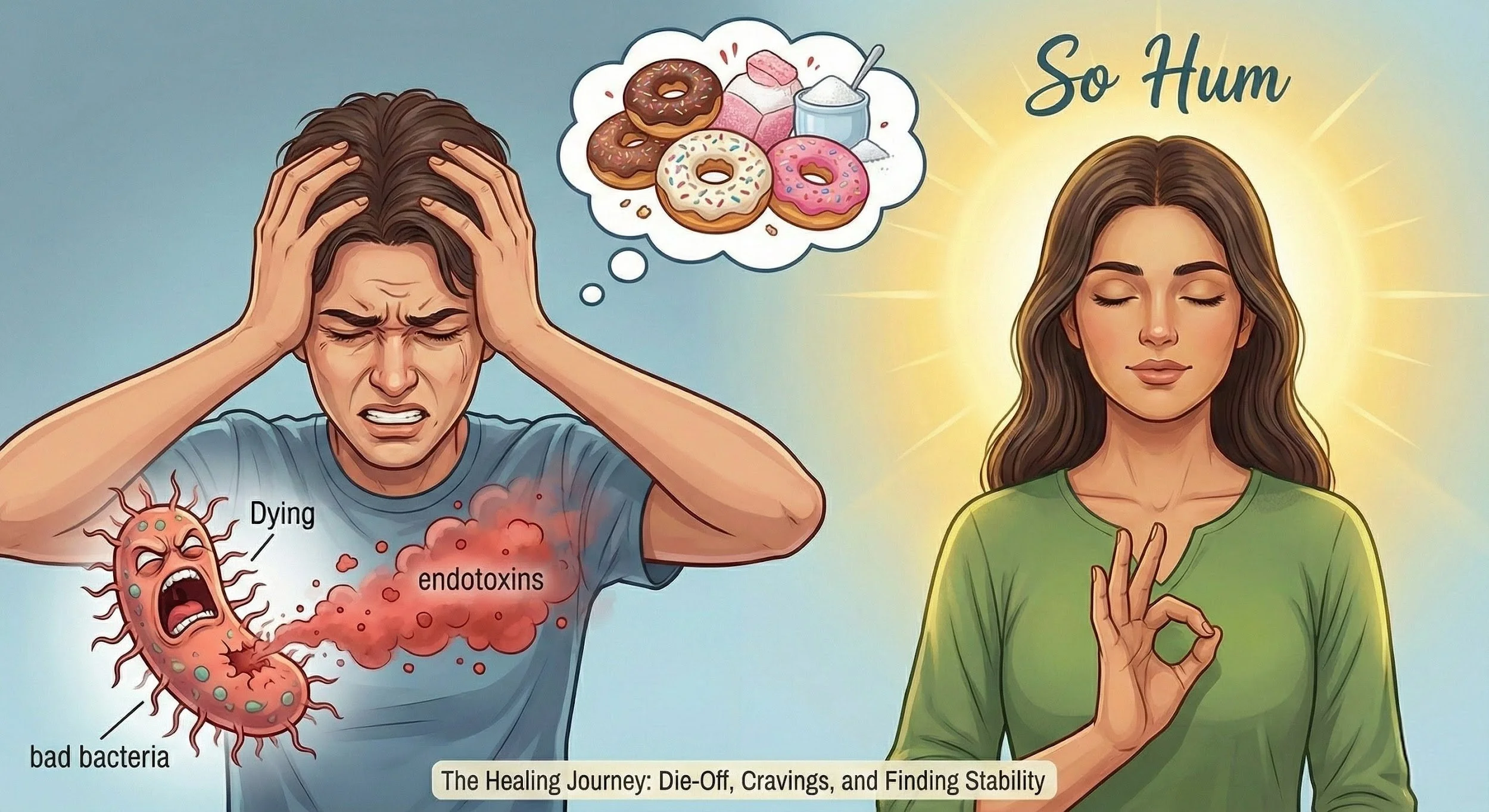
The bad bacteria in your gut are living organisms. When you stop feeding them sugar and processed foods, they begin to die. This process is difficult but necessary.
1. The "Craving Scream"
Before these bacteria die, they send chemical signals to the brain screaming for food. This manifests as intense, irrational, and almost uncontrollable cravings for sugar, bread, or junk food.
Advice: Recognize that this is not you. This is the parasite talking. It will pass if you do not feed it.
2. The Herxheimer Reaction (Die-Off)
As bacteria die, they release endotoxins. This can temporarily cause increased brain fog, fatigue, irritability, or even a flare-up of symptoms for 3–7 days.
Advice: Stay hydrated. Rest. Be patient. This is a sign the protocol is working.
Tools for the Storm: Mantra & Mudra
While the body detoxes, use these ancient tools to anchor the mind.
1. The Mantra: "So Hum"
Meaning: "I am That" (identifying with the calm, eternal soul, not the chaotic mind).
Practice: On the inhale, silently say "So." On the exhale, silently say "Hum." Do this for 5 minutes when anxiety spikes.
2. The Mudra: Prithvi Mudra (Earth Gesture)
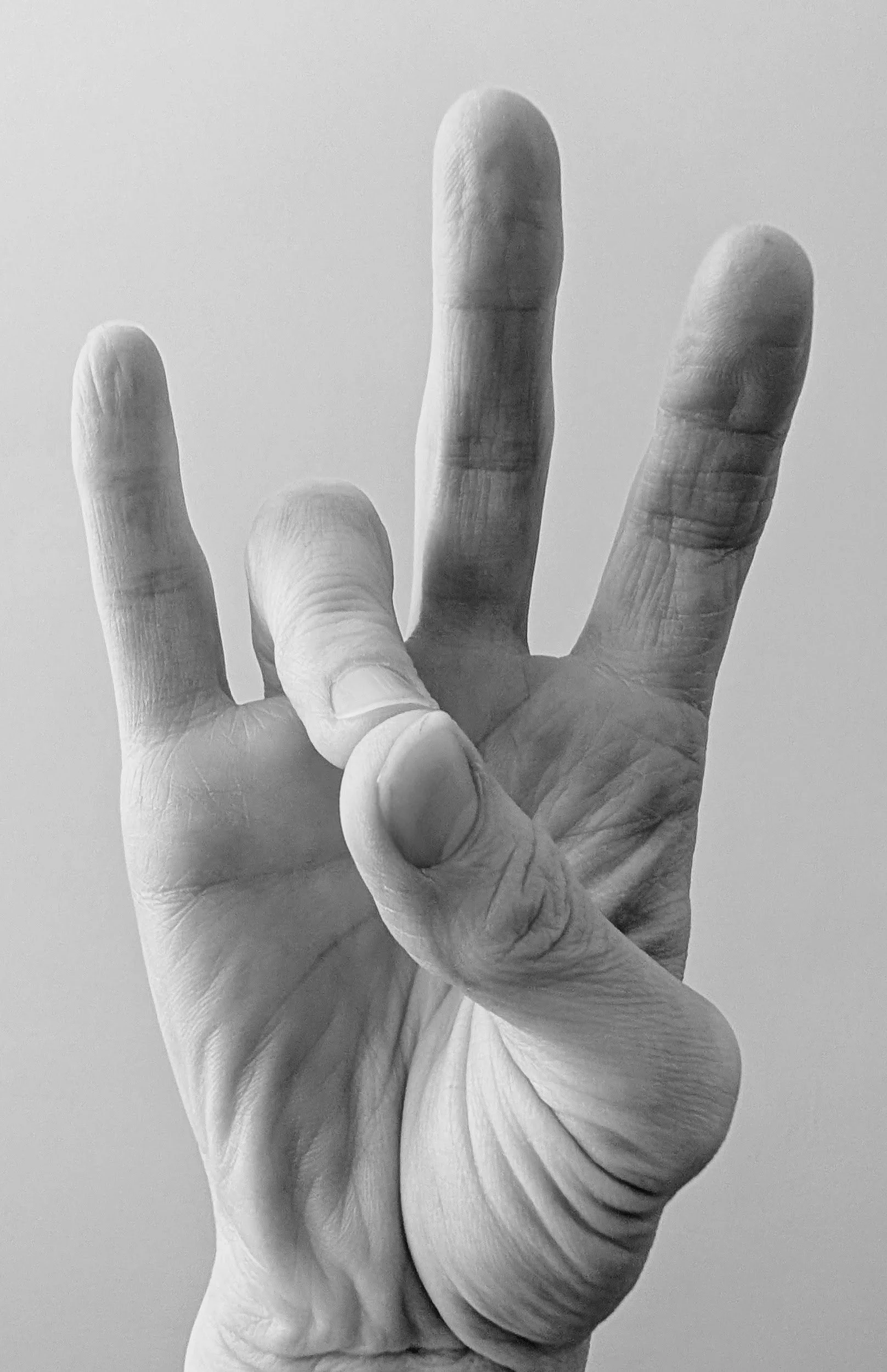
Prithvi Mudra: The Earth Gesture used to build stability, strengthen the tissues, and ground a restless mind.
Effect: Increases the Earth element, providing stability and reducing physical weakness.
How to do it: Touch the tip of your ring finger to the tip of your thumb with light pressure. Keep the other three fingers straight. Rest your hands on your knees.
References & Research Links
Medical Studies (NIH & Stanford):
The Gut-Schizophrenia Connection: An NIH study detailing how gut bacteria differs in people with schizophrenia.
Ketogenic Diet & Mental Illness: Stanford Medicine’s breakthrough study showing "drastic improvements" in severe mental illness via diet.
https://med.stanford.edu/news/all-news/2024/04/keto-diet-mental-illness.html
The Gut-Brain Axis: A comprehensive review from the National Library of Medicine on how the gut controls the brain.
Ayurvedic Resources (SVA Lineage):
SVA Dietary Guidelines: The official food protocols from the Shaka Vansiya Ayurveda tradition.
https://www.svayurveda.com/general-dietary-sva-recommendations/
The Mechanics of Digestion: Vaidya Mishra’s teaching on how "Pachak Pitta" and the gap in the gut influence health.
https://www.svayurveda.com/happens-eat-mechanics-ayurvedic-digestion/
Disclaimer: This information is for educational purposes only. Schizophrenia is a serious medical condition. Never stop or change medication without your doctor's supervision. Dietary changes should be done with professional guidance.