
When the Whole Country Is Exhausted: An Ayurvedic Look at America's Fatigue Crisis & What to do About It

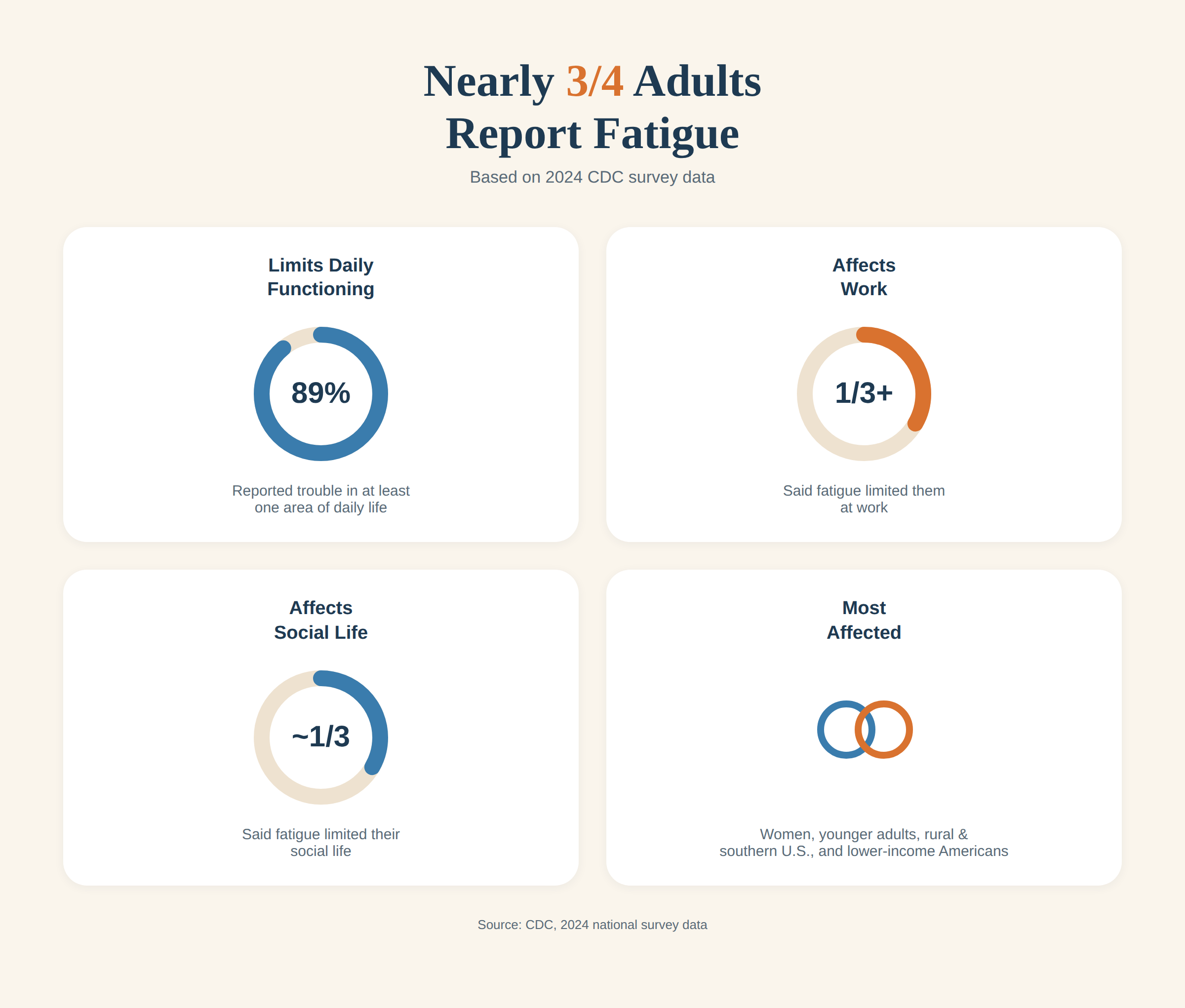
A CDC report confirmed what many of us already feel in our bones. Nearly three-quarters of adults reported feeling fatigued in the past three months, and over 15% felt fatigued most or all of the time.
That’s not a small dip in energy. Based on the national population, that adds up to roughly 190 million people carrying some level of exhaustion right now.
What the research found

CDC: US Fatigue Data
The CDC drew on 2024 survey data and looked at fatigue broadly, not tied to any one diagnosis. A few findings stand out:
Who is most affected. Women reported frequent fatigue more often than men, younger adults more than older adults, and people in rural areas and the southern U.S. more than those in cities. Indigenous populations and the poorest Americans carried the highest rates.
What fatigue takes with it. Nearly 90% of people with frequent fatigue reported trouble in at least one area of daily functioning, things like concentration, self-care, or mental health symptoms such as depression and anxiety. More than a third said fatigue limited them at work, and close to a third said it limited their social life.
What it isn’t. The researchers were careful to note this is a snapshot, not a cause-and-effect study. It doesn’t tell us why so many people are exhausted, only that they are.
An Ayurvedic lens on why this might be happening
Shaka Vansiya Ayurveda (SVA), one of the lineages we draw from here at Luminous Path, has a long-standing framework for understanding fatigue that doesn’t require modern data to validate it.
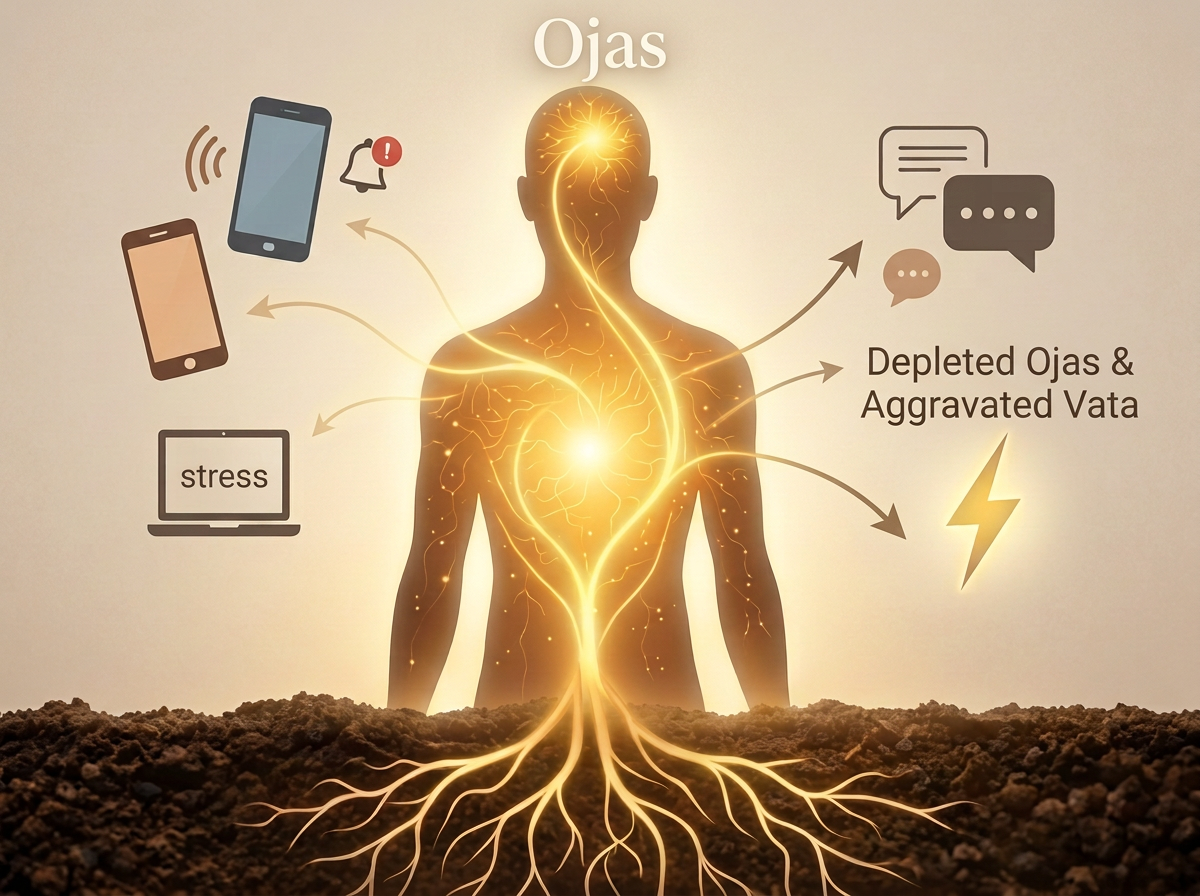
In this tradition, sustained exhaustion is often described as a depletion of Ojas (pronounced OH-jus, meaning the body’s vital reserve or essence). Ojas is built through rest, nourishment, and rhythm. It’s spent by overstimulation, irregular sleep, constant screen exposure, and the kind of low-grade stress that never fully resolves.
When Ojas runs low, the Vata (VAH-tah, the Dosha governing movement, air, and the nervous system) tends to become aggravated. An aggravated Vata often shows up as scattered thinking, anxiety, disrupted sleep, and the “tired but wired” feeling so many people describe.
Some gentle starting points
If you’re one of the 190 million, here are a few practices we return to again and again with clients. None of these require an overhaul.
Anchor a Dinacharya. Dinacharya (dee-nah-CHAR-yah, meaning daily routine) is one of the oldest tools in Ayurveda for rebuilding Ojas. Waking and sleeping at consistent time, prioritizing your self care regimens and having a consistent routine does more for the nervous system than most people expect.

Protect the transition into sleep. A short wind-down, dim lights, no screens for a few hours before bed, a few minutes of Pranayama (breathwork), signals to the body that it’s safe to rest. Rest that doesn’t restore usually means the nervous system never got the signal to stand down.

Make space for stillness, not just sleep. Restorative Yoga, Yoga Nidra, or a short sound healing practice can reach a kind of rest that sleep alone doesn’t always provide, especially for people carrying chronic stress.
Consider your rhythm, not just your hours. Modern sleep science increasingly supports what Dinacharya has taught for centuries: consistency matters!
Ask for support before depletion becomes chronic. Fatigue that lingers for months deserves real attention, from a practitioner and, where appropriate, a physician. This is especially true if it’s affecting your work or relationships, as the CDC data suggests it does for many.
A Meditative Mudra Practice
Hakini Mudra: For Mental Reset & Focus
Use this powerful gesture when your brain feels fractured, scattered, or overloaded by competing thoughts.
The Science: Bringing your fingertips together stimulates nerve endings that promote instant communication between the left and right hemispheres of the brain, rapidly centering your focus.
How to Do It:
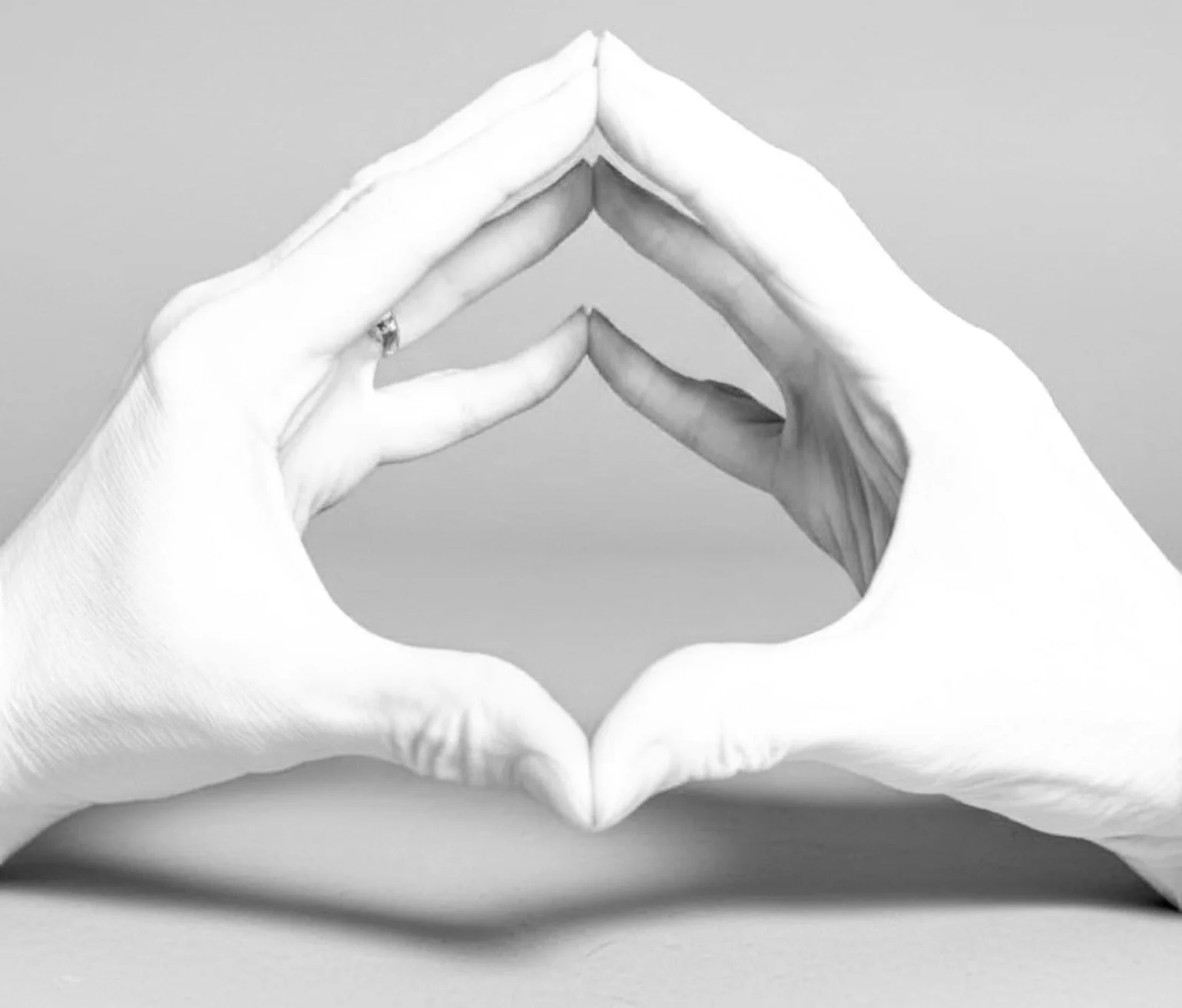
Connect: Bring your hands in front of your chest and touch the tips of all five fingers of the right hand to the corresponding tips of the left hand.
Shape: Keep your palms separated, creating space as if holding an invisible sphere.
Focus: Close your eyes or direct your gaze slightly upward toward the space between your eyebrows.
Breathe: As you inhale deeply, press the tip of your tongue to the roof of your mouth. Relax your tongue as you exhale. Hold for 2 to 5 minutes.
An invitation
If this data reflects something you’ve been feeling, you’re not imagining it, and you’re not alone in it. We’d be glad to sit with you and look at what depletion looks like specifically in your body, your Dosha pattern, and your life. Whether that’s a Nadi Pariksha (pulse diagnosis) session, a restorative sound bath, or simply a conversation about where to start, the door is open.
Fill your cup first 🍵💕,
Jennifer Misterka